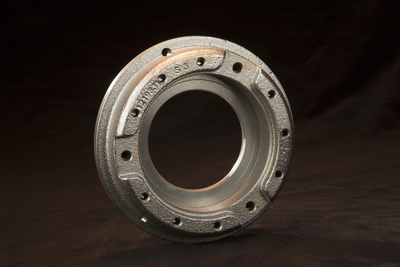
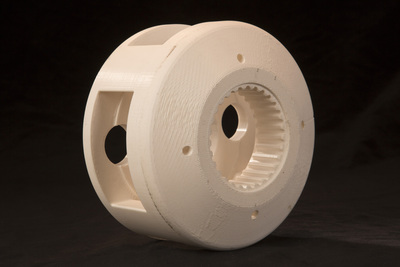
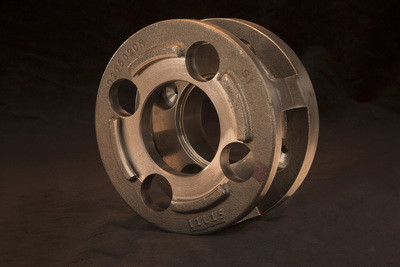
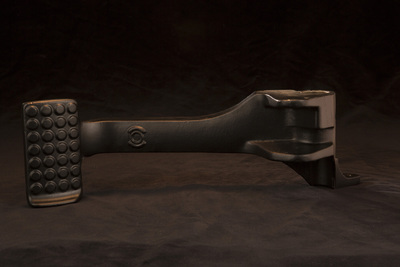
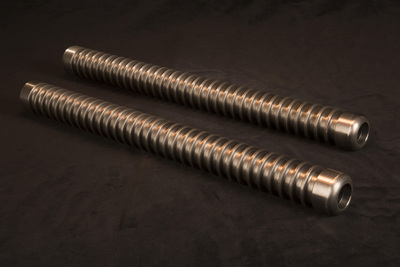
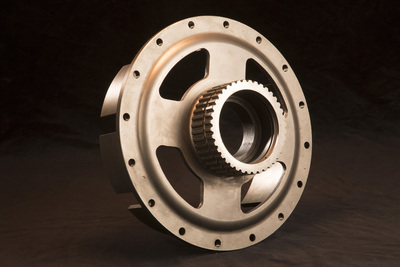
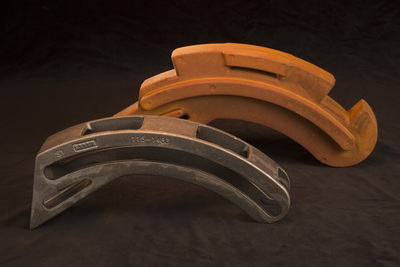
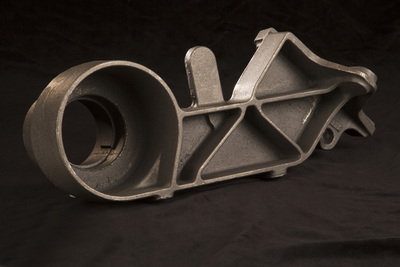
Austempered Ductile Iron (ADI) is a heat treated form of as-cast ductile iron. The heat treat process, austempering, was developed with the intent of improving on the strength and toughness of ferrous alloys. Ductile iron, with its relative ease and low cost of manufacture, has been one of the largest beneficiaries of the austempering process. As a result, Austempered Ductile Iron has burst onto the scene in recent years with a host of creative and innovative casting solutions.

Smith Foundry produces the five most common grades recognized by the American Society of Testing and Materials (ASTM).

Grades of ASTM A897 Austempered Ductile Iron Produced at Smith Foundry


Ref. Grade # ASTM A897 Grade Tensile Strength Yield Strengths Elongation Brinell Hardness
1 130-90-09 130,000 p.s.i. 90,000 p.s.i. 9 % 269-341
2 150-110-07 150,000 p.s.i 110,000 p.s.i 7 % 302-375
3 175-125-04 175,000 p.s.i. 125,000 p.s.i. 4 % 341-444
4 200-155-02 200,000 p.s.i 155,000 p.s.i. 2 % 388-477
5 230-185-1 230,000 p.s.i. 185,000 p.s.i. 1 % 402-512


*Tensile, Yield and Elongation values are minimums required by ASTM A897 for an independantly cast tensile test bar sample. Consult ASTM A897 or Smith Foundry for more information.


Grades 1, 2 and 3


Grades 1, 2 and 3 are typically reseved for applications requiring increased strength and toughness while maintaining a reasonable level of ductility and impact resistance. Commonly employed in fabrication to casting conversion projects, these grades offer mechanical performance that is often comparable to steels, but without the added cost. Machining after heat treat is attainable utilizing proper tool selection.

Desirable properties
  • Yield strength, toughness and impact resistance comparable to many cast/forged steels
  • Vibration dampening and heat transfer superior to other ferrous/non-ferrous alloys
  • Significant weight and cost savings over both aluminum and steel castings/forgings
  • Increased fracture and fatigue strength
  • Cost savings over aluminum and steel castings/forgings

Common Applications
  • Shafts, drive yokes and gears
  • Clamps and brackets
  • Linkages
  • Skid plates
  • Cams


Grades 4 and 5


Grades 4 and 5 excel in wear and abrasion resistance applications. Typically used in the replacement of hardened steels and white irons, these grades have common uses in the construction and farm equipment industries. However, due to their extreme hardnesses, machining of grades 4 and 5 ADI is usually performed prior to heat treat.

Desirable properties
  • Superior hardness and wearability over as-cast ferritic and pearlitic ductile irons
  • Significant cost savings compared to exotic steels
Common Applications
  • Digger, tillage and auger points
  • Rollers and wheels
  • Machine tool components
If you have any questions or concerns regarding the use of Austempered Ductile Iron, please contact us for help in selecting the proper grade for your application. On a case by case basis, we can offer more insight and detail about the additional uses and limitations of ADI as it pertains to your application.


Smith Foundry Casting Processes Capabilities Quality Control Contact Us

Austempered Ductile Iron